The latest breakthroughs in Assisted Reproductive Technologies (ART)
Published on Tuesday, September 15, 2026
Genetic diversity is one of the criteria of healthy wildlife populations. Yet today inbreeding, resulting of genetic impoverishment, leads to numerous harmful effects and is one of the main drivers of species decline.
- Lower fertility rates,
- More congenital abnormalities,
- Increased susceptibility to infectious diseases,
- Reduced ability to adapt to environmental changes.
To help address this challenge, the IUCN recognizes in 2013 assisted reproductive technologies (ART) as an important component of modern species conservation strategies, that need to be developed.
Assisted reproduction is a complementary tool that makes possible: to create genetic banks (semen, embryos) and thus a reserve of genetic material for the future ; to achieve births in situ with minimal human intervention. It helps preserve biodiversity while avoiding the risks and costs associated with translocating live animals: it is safer, less expensive, and more practical to transport and use semen than to transport and introduce live animals.
For more than two decades, the CRESAM (opens in a new tab)- Conservation and Reproduction of Endangered Wild Animal Species- has brought together leading experts in reproductive science to develop innovative ART, transforming cutting-edge research into practical solutions for wildlife conservation. The research and actions of the CRESAM aims to restore biodiversity of in situ animal populations by assisted reproduction to improve reproduction rate and genetical enrichment.
This NGO composed of French experts in reproduction, acts around the world to help and promote genetic biodiversity of endangered species, especially wild carnivores and mostly wild felids.
In 2006, the CRESAM achieved the first birth of cheetahs through artificial insemination in a natural environment in South Africa. Although four cubs were born, none survived due to high lion predation in the reserve, highlighting that successful conservation depends on both reproductive technologies and suitable ecosystems.
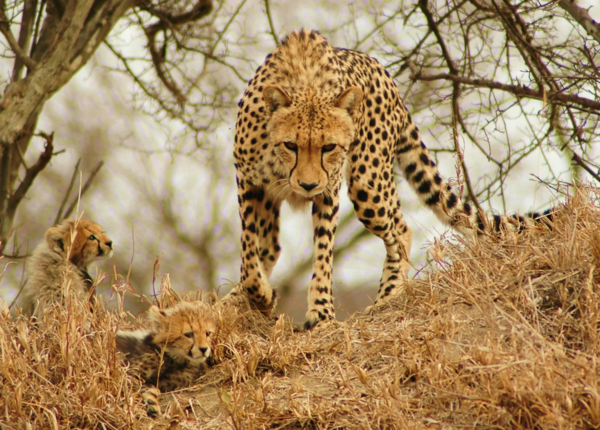
Birth of cheetahs in the wild
In July 2007, CRESAM was recognized as a public interest organization, highlighting the importance of its work in the field of endangered species conservation.
- assisted reproduction using hormonal stimulation,
- artificial insemination in a natural setting,
- the use of in vitro fertilization in cheetahs since 2023,
- semen and embryo banks,
- the creation of a reference genetic bank for wildlife.
- Innovative endoscopic tool for non-invasive intrauterine insemination in felids,
- Optimization of ultrasound for ovarian monitoring in wild carnivores: a new non-invasive technique for visualizing ovarian follicles via transrectal ultrasound,
- Refinement of semen collection protocols for wild felids,
- Optimization of the use of male semen: specific method for freezing feline semen by selecting the best spermatozoa,
- The use of microsatellites to study the genetic variability of cheetah and other wild felid populations,
- Non-invasive transcutaneous oocyte aspiration leading to successful in vitro fertilization in felids, notably cheetahs,
- The development of new methods for in vitro embryo development to improve the success of embryo transfers.
These innovations are helping build the foundations for long-term biodiversity conservation by supporting genetic management, future breeding programs and species recovery initiatives.
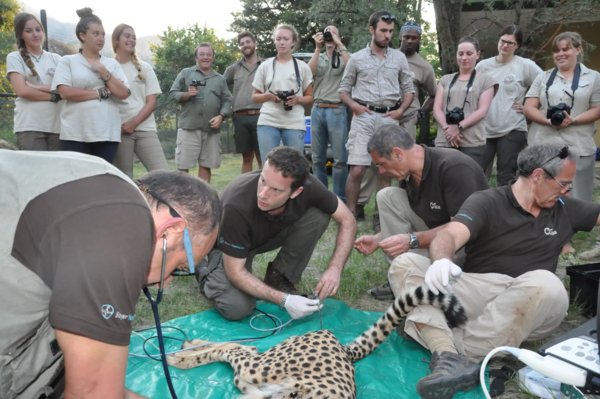
Insemination with frozen semen ©CRESAM
- The development of additional seed and embryo banks for other species in various countries, as the boreal lynx in French Alpes,
- Extension of assisted reproduction protocols.
Embryo cryopreservation and transfer could offer a new way to preserve and restore genetic diversity by introducing genetically distinct embryos into protected populations, without the need to translocate adult animals.
The CRESAM helps to transform scientific innovation into practical conservation solutions and leverages science to protect vulnerable species and strengthen their long-term resilience.
- Genetic conservation: Creation of a sperm and embryo bank to maintain and enhance the genetic diversity of cheetahs,
- Multi-species approach: Expansion of the project to other threatened felines on different continents,
- Population restoration: Reintroduction of cheetahs into nature reserves with a suitable habitat protected from predators such as lions and hyenas,
- Awareness and education: Communication about the importance of biodiversity and the role of modern technologies in its preservation,
- Sustainable development: Boosting the local economy through wildlife tourism and income-generating activities for the local population.
The collaboration with Ceva Wildlife Research Fund would enable CRESAM to accelerate the development of its assisted reproduction programs and extend its techniques to other endangered species in order to strengthen its impact on biodiversity conservation.