
Faced with certain diseases threatening the survival of wildlife, we support research into appropriate health solutions. By transforming knowledge into practical applications, we provide field teams with additional tools to protect the health and improve the resilience of threatened populations.

Our Mission
Over the past few centuries, humans have profoundly reshaped the planet:
0
of terrestrial environments have been altered
0
of the oceans are transformed
0
wetlands have disappeared
As wild habitats shrink, the boundaries between species are blurring and with them, the natural barriers that limit the spread of disease.
Human expansion : deforestation, urbanization, and intensive agriculture, facilitates contact between species.
0
additional cases of human malaria for every km² of deforested land
0
of the Earth’s surface accounts for the vast majority of areas of direct contact between humans and wildlife
0
human mortality from disease can be 9 times higher in areas where animal biodiversity is declining
In regions where animal biodiversity is declining, rodents that are potential disease vectors proliferate, and the risk of epidemics increases.
Today, more than 3.5 billion people live in areas of direct contact with nature. Although these areas account for barely 5% of the Earth’s land surface, they are hotspots for disease transmission. More than 70% of emerging infectious diseases in humans are estimated to originate from animals, with nearly two-thirds of them originating from wildlife.
This exchange is not one-way: humans can also transmit pathogens to wild animals. These silent transmissions weaken already threatened populations and disrupt the ecological balances on which we depend.
The paradoxWildlife health: the greatly neglected area of worldwide research. |
 |
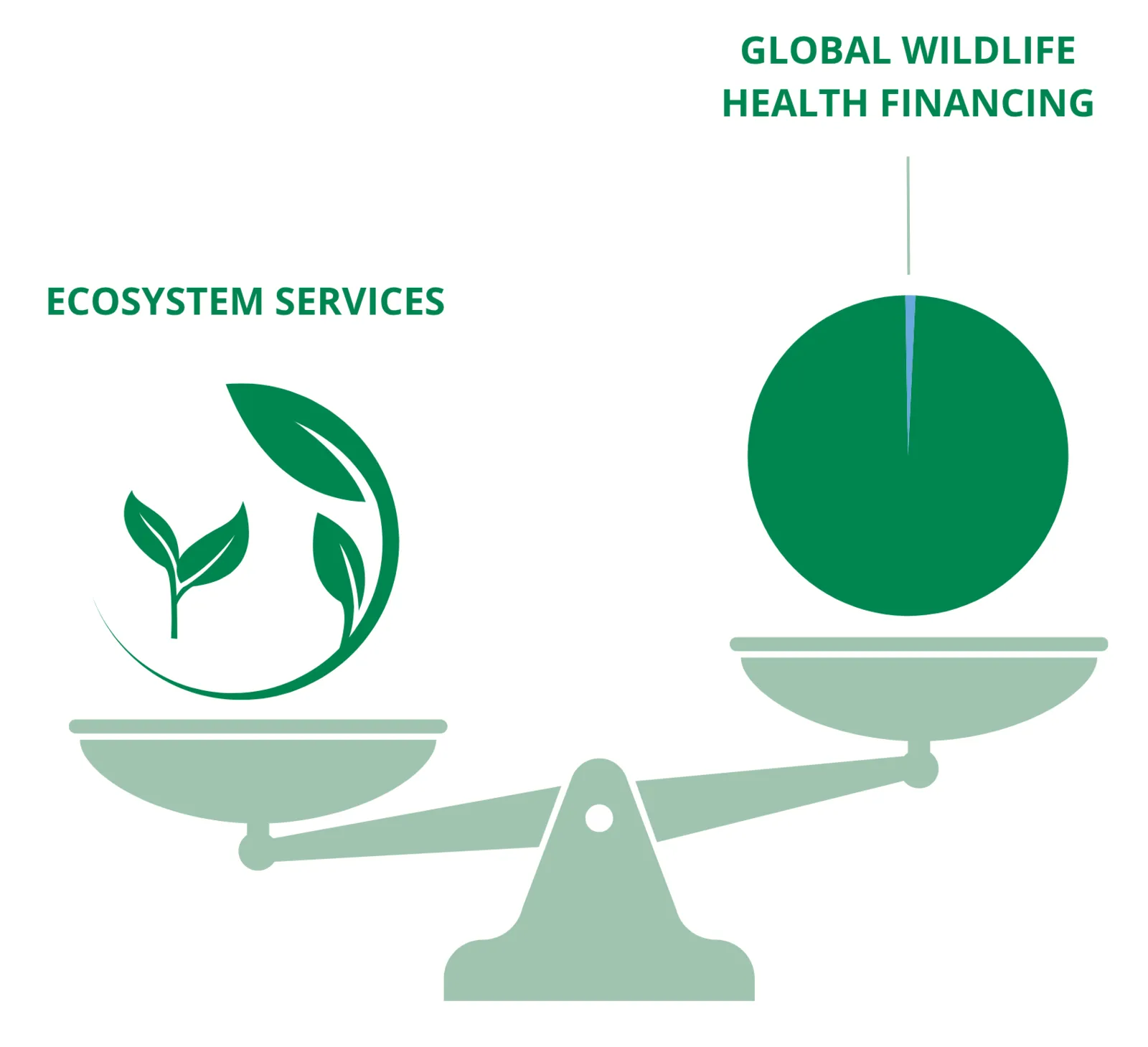 | Wildlife serves as a true barometer Nature gives generously, while we invest only if there is a return. |
Ceva Wildlife Research Fund is an endowment fund dedicated to wildlife health that supports stakeholders in the field by funding applied research projects and providing expertise to safeguard biodiversity and contribute to global health.
Monitoring diseases, whether for emerging, endemic, or cross-compartment (human, animal, or environmental) diseases, is essential to protect the health of animal populations and ecosystems. We support research aimed at understanding epidemiological mechanisms and developing tools for surveillance, analysis, and modeling. This enables better measurement, anticipation, and control of pathogen transmission before major health crises emerge.
In response to the pressures facing wildlife - habitat loss, genetic depletion, or environmental transformation - which are compromising their health, the fund supports innovative strategies aimed at restoring ecological balance, reducing conflicts, and enabling sustainable coexistence across all compartments.