Preparing Singapore for avian influenza: a strategic partnership to strengthen its response capacity
Published on Friday, November 28, 2025
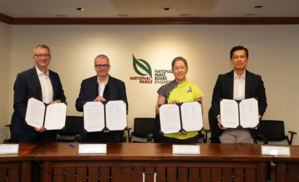
From left to right: Pierre-Marie Borne, director of Ceva Wildlife Research Fund; Marc Prikazsky, CEO of Ceva and Chairman of Ceva Wildlife Research Fund; Hwang Yu-Ning, CEO of the National Parks Board; Bennett Neo, CEO of the Mandai Wildlife Group.
Photo credit: National Parks Board
Ceva Wildlife Research Fund (CWRF), Ceva Santé Animale (Ceva), the National Parks Board (NParks – the National Parks Board of Singapore) and the Mandai Wildlife Group announce the signing of a memorandum of understanding to jointly conduct a pilot project to vaccinate birds in Singapore’s wildlife parks against avian influenza. This program is modeled after similar initiatives carried out in Europe and draws on Ceva’s extensive expertise in this field. It aims to protect the health of the most vulnerable birds and to expand thevaccine’s effectiveness against the threat of Highly Pathogenic Avian Influenza (HPAI) a wider range of species.
While Singapore remains free of HPAI, the disease is rampant in many regions of the world and continues to spread a global scale; it is therefore imperative to remain vigilant. This collaboration also supports Singapore’s commitment to strengthening its epidemiological surveillance and biosecurity program in the the long term, while proactively protectingbirds.
The global spread of HPAI serves as a reminder that it is essential to fully understand the diseases that affect wildlife, domestic animals, and humans. This situation highlights the need to adopt a “One Health” approach, closely linking human, animal, and environmental health.
This initiative reflects Singapore’s proactive efforts not only to strengthen its level of preparedness but also to prevent the spread of the HPAI through the latest-generation vaccine developed by Ceva. This vaccine can be used in various species and targets different circulating strains.
The research, which will begin in 2026, will evaluate the results of vaccination in species under the care of the Mandai Wildlife Group, particularly those that are vulnerable to HPAI or whose conservation is of particular importance. This study will focus on birds representing several avian orders, and potentially on species such as the (Gyps africanus), the sacred kite (Haliastur indus), and the marbled teal (Marmaronetta angustirostris). This research will provide a better understanding of the immune response to the vaccine, the duration of protection, and the across species, and thus to develop preventive vaccination strategies that could strengthen birds’ protection against HPAI.
As part of this collaboration, Ceva Wildlife Research Fund will lead the scientific and logistical aspects of the program, while Ceva will supply the vaccines. NParks will coordinate the vaccination program and help test and analyze the results, while the Mandai Wildlife Group will monitor the birds involved and ensure their well-being throughout the process. Vaccination is an integral part of the preventive medicine program implemented by the Mandai Wildlife Group for its animals to ensure their health and well-being. It is carried out under the supervision of a veterinarian.
This partnership demonstrates a shared commitment to animal health , the preservation of biodiversity, and the implementation of scientific solutions to address conservation challenges.
💬Marc Prikazsky, CEO of Ceva and Chair of Ceva Wildlife Research Fund:
This collaboration reflects the very essence of the One Health approach: it combines scientific innovation, veterinary expertise, and a commitment to wildlife conservation. Through this joint effort, we aim not only to protect thesethese vulnerable birds against avian influenza, but also to improve our collective preparedness against emerging threats related to zoonoses - diseases that affect both animals and humans.
💬Hwang Yu-Ning, CEO of the National Parks Board:
As we work to make Singapore a city in nature, such partnerships demonstrate how scientific innovation, combined with responsible management and pooling our expertise, can strengthen our resilience in the face of global health challenges, while advancing wildlife conservation. While Singapore has so far been spared from HPAI, this proactive vaccination pilot project will allow us to gain new insights to anticipate risks and protect both our wildlife and our community. The results will help enrich scientific knowledge on the prevention of HPAI in various bird species.
💬Bennett Neo, CEO of the Mandai Wildlife Group:
We are proud to be part of this strategic collaboration. The diversity of the specieswe care for allows us to gather unprecedented information on the vaccine’s effectiveness and deepen our knowledge, which will help define conservation and health strategies at the local and global levels. Protecting these birds means safeguarding the future of some of the world’s most vulnerable species. By working closely with our partners, we hope to turn this knowledge into concrete actions for wildlife conservation on aglobal scale.
💬 Anuj Maheshwari, Head of Agri-Food, Temasek:
The fight against animal diseases, particularly zoonoses, is a fundamental pillar in building a safer and more resilient world. We are delighted to see Temasek-backed companies, such as Mandai Wildlife Group and Ceva Santé Animale, partner with the National Parks Board to preserve biodiversity and better prepare for emerging health risks. At Temasek, we actively encourage these types of collaborations within our ecosystem to help create a healthier and more sustainable future for all.
A scientific and oversight committee will oversee the project to ensure regular communication and transparent sharing of results. The project plans to publish the results for the benefit of the entire veterinary and conservation community.