Nearly 180 birds vaccinated against avian influenza at Pairi Daiza
Published on Wednesday, September 23, 2026
🦅
A new milestone for the research programme
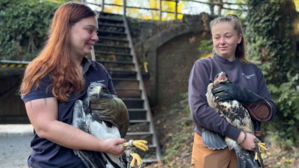
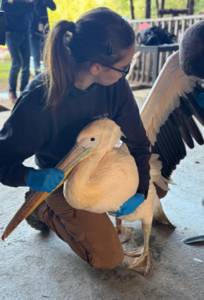
This year marked a significant step forward for the programme, with the very first vaccination of nearly 100 birds of prey (vultures, eagles, condors, marabou storks...). This was carried out alongside the usual annual booster vaccinations, administered this year to around 20 pelicans - Australian pelicans (Pelecanus conspicillatus) and African white pelicans (Pelecanus onocrotalus) - as well as to around sixty African penguins (Spheniscus demersus).
A dual objective: building evidence and advancing research
Since 2023, this programme has established that the vaccine is safe to administer and triggers a good immune response in the species involved. Building on this foundation, the research now aims to demonstrate that vaccination effectively protects these birds against avian influenza - while also generating broader scientific knowledge on the immune response of different species to the virus.
We administer the avian influenza vaccine, then take a blood sample to test for antibodies. Since these animals are being vaccinated for the first time, this gives us a baseline antibody level and confirms they have never been exposed to the virus. A second blood sample will then be taken to check whether the vaccine has worked.
An international collaborative approach
The data gathered during these campaigns is compared with data from other zoological parks involved in vaccination programmes supported by Ceva Wildlife Research Fund, including several zoos in France, Hungary, and Singapore.
Since each site involves relatively small numbers of animals, pooling data across species and locations is essential to strengthen the scientific value of this work and to inform future strategies for wildlife health.
We collaborate with several zoological parks to evaluate this vaccine together, as we do with Pairi Daiza. The data collected on pelicans, penguins, and birds of prey is then shared with veterinarians across these parks, in Europe and elsewhere, so that decision-makers have access to it.