Fighting avian influenza: Ceva WRF and the AFVPZ launch a pilot project at six french zoos
Published on Tuesday, January 27, 2026
Avian influenza also threatens zoo animal populations
In response to the highly pathogenic avian influenza (HPAI) outbreak affecting Europe, Ceva Wildlife Research Fund (Ceva WRF) and the French-Speaking Association of Zoo Veterinarians (AFVPZ) are collaborating to strengthen the protection of birds in zoos against this disease.
Zoos are home to many species of birds, often of great conservation value because they are threatened in their natural habitats. Exposed to the risk of avian influenza through direct or indirect contact with wild birds, they must be protected by innovative solutions to prevent this disease. Vaccination is a solution that helps prevent this disease and is compatible with the birds’ well-being, as it does not restrict their freedom of movement.
A vaccination campaign based on a scientific research project
Under the auspices of the AFVPZ and conducted in collaboration with zoos, Ceva Wildlife Research Fund—an endowment fund dedicated to wildlife health research—supports the implementation and monitoring of a vaccination campaign for exotic birds against avian influenza.
This scientific research project aims to evaluate the protection provided by the vaccine by collecting data on the immune response of the species involved.
Until now, French zoos had access to only one vaccine. Changes to national regulations, which took effect this summer, now give them access to an innovative vaccine developed by Ceva Santé Animale (Ceva), thereby paving the way for this research project.
This program draws on the recognized expertise of Ceva’s veterinary laboratory in the field of avian influenza, as well as the promising results of similar projects already conducted by Ceva WRF in zoos in Belgium and Hungary, and in the wild in the French Southern and Antarctic Lands in partnership with the CNRS (National Center for Scientific Research) – CEFE. In these settings, the Ceva vaccine—initially designed for domestic and farm animals—has demonstrated a strong immune response and safety in several wild species studied.
Based on these results, this latest-generation vaccine, adapted to the virus strains currently in circulation, is likely to be effective in several species.
These initiatives carried out in zoos are important for improving prevention strategies
while protecting individuals of high conservation value.
Dr. Pierre-Marie Borne, director of Ceva WRF, states:
“This vaccination program reflects Ceva Wildlife Research Fund’s commitment to protecting wildlife, drawing on scientific research to better anticipate and prevent health risks to exotic birds.”
6 zoos participating, 3 target bird groups
Six French zoos are participating in this research project: the Paris Zoological Park (National Museum of Natural History – MNHN), the Planète Sauvage Safari Park, the Haute-Touche Zoological Reserve (MNHN), the Palmyre Zoo, the Mulhouse Zoological and Botanical Park, and the Beauval ZooParc.
About twenty bird species were vaccinated, divided into three major groups:
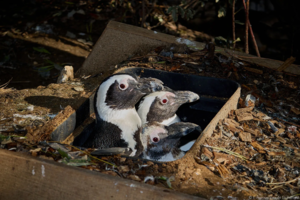
- spheniscids (penguins),
- ratites (ostriches, emus, etc.)
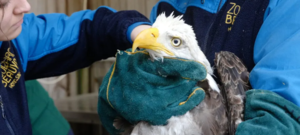
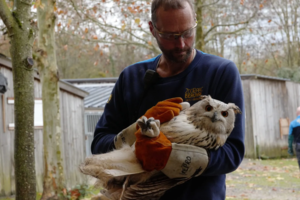
- and birds of prey.
Their selection is based on three criteria:
- their susceptibility to disease,
- their conservation value,
- and the need to expand the available scientific data.
A Scientific and Technical Collaboration
In this project, Ceva WRF contributes its scientific expertise, organizes logistics, and supplies the vaccines. The zoos, for their part, select the birds, monitor them, and designate the veterinarians in charge, while the AFVPZ provides scientific and technical support, particularly for implementing vaccination protocols and ensuring compliance with operational conditions.
Upon completion, the scientific data collected and analyzed will help objectively assess the potential benefits of this vaccine technology for conservation medicine.
Photo credits: @F.Perroux-La Palmyre Zoo