

TASMANIAN DEVIL
TASMANIAN DEVIL

Tasmania – Developing a vaccine to protect Tasmanian devils from facial cancer

This project in Tasmania aims to develop an innovative vaccine against a contagious form of cancer in Tasmanian devils, which has caused sharp declines in wild populations. The disease is a transmissible facial tumor, and an oral vaccine delivery strategy using bait is currently being developed for deployment in the wild. The goal is to enable the immunization of animals directly in their natural habitat, without the need for capture, using this innovative approach tailored to wild populations.

Project overview

Location: Tasmania, Australia 🇦🇺

Project Leader: Prof. Andrew Flies

Status: In progress

Duration: 4 years - 2025 to 2029 

Partners: 

Context


Tasmanian Devil Facial Tumor Disease (DFTD) is a contagious cancer transmitted through bites, leading to a major decline in wild populations. Since its discovery in 1996, the disease has caused a reduction of approximately 80% in the population, which previously numbered about 54,000 individuals. 
The original form (DFT1) has spread widely across Tasmania, affecting more than 90% of the territory. In 2014, a second, independent form (DFT2) was identified on a peninsula in the southern part of the island. DFT2 was first detected outside this area in 2022, suggesting a risk of gradual spread throughout Tasmania. 


These transmissible cancers have profoundly altered the ecology, genetics, and adaptive capabilities of Tasmanian devils. The population’s very low genetic diversity also increases individuals’ susceptibility to the disease and may influence their response to anti-tumor vaccine approaches. 

In addition to DFTD, the species faces other major threats, including attacks by domestic dogs, collisions with vehicles, and the loss and gradual fragmentation of its habitat. 

The decline in Tasmanian devil populations across the region has led to ecological imbalances, including a decline in certain native species (such as bandicoots), linked to increased competition with feral cats. 

Project challenges


Infection with DFTD results in an extremely high mortality rate, estimated at approximately 99.5%, making this disease one of the most critical threats to a wildlife species. 

Transmission via bites, combined with high prevalence and widespread dissemination across nearly all of Tasmania, makes any control strategy particularly complex. The current lack of effective management tools against DFT2 further underscores the urgency of intervention. 

In this context, the development of preventive solutions, particularly vaccines, represents a major challenge for the conservation of the Tasmanian devil and the restoration of associated ecological balances. 

Scientific issue

DIABLE-TASMANIE-CRAYON.png


How can an effective vaccine be developed to prevent the transmission of Tasmanian devil facial tumors in the wild? 


Proposed solution

Understanding immune mechanisms 


The Tasmanian devil’s immune system is capable of recognizing and eliminating tumor cells. Spontaneous tumor regression has been observed in wild individuals, and some vaccinated animals have shown an antitumor response following targeted stimulation. The biological barrier identified: tumor cells “camouflage” themselves by expressing very few surface molecules (MHC-I) that would allow the immune system to detect them. 


Development of a vaccine strategy adapted to the wild 


An initial whole-cell vaccine was tested without sufficient success in captive and field settings. The team therefore changed its strategy in 2019 by developing an oral vaccine delivered via bait, based on a viral vector, an approach much better suited to vaccinating free-ranging wild populations. 

The vaccine candidate targets two antigens: 

• An MHC-I protein, present in both forms of DFTD but absent (or rare) in healthy Tasmanian devils, which forces the immune system to recognize the tumor as foreign,  
Neoantigens (antigens specific to tumor cells (DFT1)), for a targeted immune response. 


A Major Innovation  


This program represents a potentially global breakthrough: it would be the first oral vaccine against a transmissible cancer deployed in a wild species, with the goal of preventing facial tumor disease in Tasmanian devils in the wild.


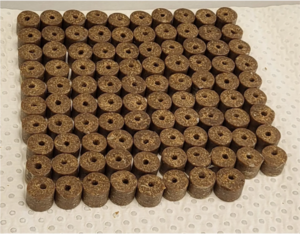
baits.jpg

Baits used for the administration of the oral vaccine.

Project objectives

What the Project aims to demonstrate 


Develop and evaluate a preventive vaccine 

-Develop a vaccine capable of preventing facial tumor disease in wild Tasmanian devils, 
-Test an oral vaccination approach suitable for free-ranging populations, 
-Evaluate the effectiveness of vaccination under real-world conditions. 


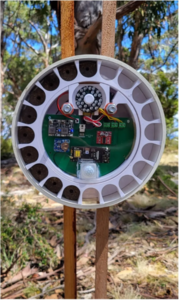
distributeur d'appâts


Optimizing field deployment and monitoring 

-Integrate smart systems into bait dispensers (pictured opposite) to identify animals that have already been vaccinated and optimize vaccination campaigns in real time, 
-Establish continuous surveillance of populations to detect the emergence of new tumors and adapt the vaccine accordingly. 


Develop a sustainable deployment strategy 

-Support the development of local production capacity to ensure the long-term availability of the vaccine,
-Support research and field centers during the testing and validation phases, 
-Gradually roll out Version 2 of the vaccine in the wild (2028–2029).

Project implementation

Key milestones 

08/2025

Signing of the partnership

2025

Development of an automatic bait dispenser

2026

Oral candidate vaccine administered under real-world conditions

2026

Collaboration with sanctuaries and laboratories

2027

Integration of artificial intelligence into the dispensers

2027

Support for local production

2027

Gradual vaccination of wild devils

Results

  • Flies, A. S., Flies, E. J., Fox, S., Gilbert, A., Johnson, S. R., Liu, G.-S., Lyons, A. B., Patchett, A. L., Pemberton, D., & Pye, R. J. (2020). An oral bait vaccination approach for Tasmanian devil facial tumor diseases. Expert Review of Vaccines, 19(1), 1–10. 


Read more (opens in a new tab)


  • Kayigwe, A. N., M. Darby, J., Lyons, A. B., L. Patchett, A., Lisowski, L., Liu, G.-S., & S. Flies, A. (2022). A human adenovirus encoding IFN-γ can transduce Tasmanian devil facial tumor cells and upregulate MHC-I. Journal of General Virology, 103(11), 001812. 
     

Read more (opens in a new tab)
 

  • Tovar, C., Pye, R. J., Kreiss, A., Cheng, Y., Brown, G. K., Darby, J., Malley, R. C., Siddle, H. V. T., Skjødt, K., Kaufman, J., Silva, A., Baz Morelli, A., Papenfuss, A. T., Corcoran, L. M., Murphy, J. M., Pearse, M. J., Belov, K., Lyons, A. B., & Woods, G. M. (2017). Regression of devil facial tumor disease following immunotherapy in immunized Tasmanian devils. Scientific Reports, 7, 43827.


Read more (opens in a new tab)

Abstract:

The primary biological barrier to DFTD is immune evasion via MHC-I; 

Targeted stimulation can restore immune recognition of tumors, 

Vaccination is feasible and effective under real-world field conditions, 

Oral vaccination using baits is the only truly scalable approach for a free-ranging population.

Ceva WRF’s involvement

Our role in this Project  


  • Financial support, 
  • Scientific expertise: guidance on immunology, vaccine development, and vaccine technology, 
  • Operational oversight. 


Glossary

Refers to domesticated animals or those descended from domesticated animals that have returned to the wild and now live without human intervention. (Source: Food and Agriculture Organization of the United Nations)
Prevalence is an epidemiological measure representing the proportion of individuals with a disease in a given population at a specific point in time or over a given period. (Source: WHO)

A biological barrier refers to a natural or artificial mechanism that limits or prevents the transmission, replication, or spread of a pathogen or a living organism. (Source: WHO)

These are the inactivated or attenuated forms of all or part of a virus or bacterium, or genetic instructions (RNA or DNA) that tell the body’s cells to produce the antigen. Antigens teach the body to recognize pathogens and fight them off in the event of subsequent exposure. (Source: WHO)