


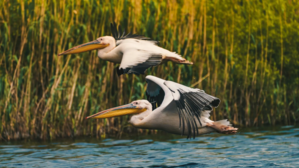
pelicans
pelicans

Singapore - Studying preventive vaccination against avian influenza in wild birds

Although Singapore remains free of avian influenza, this project, conducted in zoos, aims to anticipate risks by protecting the most vulnerable species and evaluating the effectiveness of a next-generation vaccine on various species. 
The goal is to assess the vaccine’s efficacy and safety in order to develop long-term protection tailored to wild birds in zoos.

Project overview

Location: Singapore 🇸🇬

Project Leader: Prof. Shangzhe Xie (opens in a new tab) 

Status: Starting

Duration: 4 years and 10 months - March 2026 to December 2030 

Partners: 

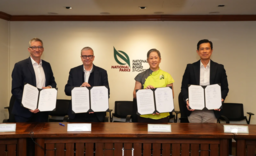
Context

An unprecedented global epizootic  
 

Highly pathogenic avian influenza (HPAI), particularly caused by H5Nx viruses (H5N1 clade 2.3.4.4b), continues to circulate actively worldwide. 

According to the Food and Agriculture Organization of the United Nations (FAO), the virus is present in domestic and wild bird populations in Southeast Asia and poses a persistent threat to animal health, biodiversity, and food systems
 

The situation in Singapore  
 

Singapore remains officially free of HPAI to date.  
This is due to the implementation of strict biosecurity measures and rigorous border controls. In addition, epidemiological surveillance programs are in place for domestic and wild bird populations to detect any introduction of the virus at an early stage. 

However, the risk of HPAI introduction remains high, particularly due to the flow of migratory birds through the region and viral circulation in neighboring countries. 

Zoos, such as the Singapore Zoo, are also areas of particular concern. They house a wide variety of exotic bird species and represent a potential interface with the natural environment. As such, they may be exposed to the virus through indirect contact with wild birds or through environmental contamination. 

As we work to transform Singapore into a “City in Nature,” partnerships like this one demonstrate how scientific innovation, responsible management, and the pooling of expertise can strengthen resilience in the face of global health challenges, while advancing wildlife conservation. Although Singapore is currently free of HPAI, this preventive vaccination pilot project allows us to gain new insights to anticipate potential risks and protect both our wildlife and our community. The results will help advance scientific understanding of HPAI prevention in various bird species.

Hwang Yu-Ning, Director General, National Parks Board

Project challenges

Why vaccinate birds preventively? 
 

In disease-free areas such as Singapore, where no cases of HPAI have currently been detected, the issue of prevention through vaccination becomes central. Maintaining this disease-free status is a major challenge and currently relies primarily on biosecurity and surveillance. However, these measures have their limitations when it comes to the risk of virus introduction. To better protect captive bird populations, preventive vaccination appears to be a complementary solution to: 

  • Anticipate the potential introduction of the virus into a disease-free area, shifting from a reactive approach to a true disease prevention strategy, 
     
  • Protect zoological collections of high conservation value, particularly sensitive or heritage species housed in facilities such as the Singapore Zoo, and safeguard ex situ conservation programs,
      
  • Reduce the animals’ vulnerability given the limitations of current measures, as biosecurity and surveillance do not guarantee individual protection and cannot prevent viral introduction on their own, 
     
  • Explore innovative strategies tailored to non-endemic contexts by developing vaccination protocols compatible with regulatory constraints and non-domesticated species. 

However, in birds, and particularly exotic species: 

  • Data on efficacy and tolerability remain limited, 
  • Immune responses can vary greatly depending on the taxon

Scientific issue


How can a proactive strategy be implemented to protect captive bird populations before the virus is introduced? 

Project objective

  • To strengthen Singapore’s preparedness against the external risk of HPAI introduction.


What the Project aims to demonstrate

Fichier 6.png


  • Immunological efficacy

To evaluate the vaccine’s ability to induce a protective humoral and/or cellular immune response, and to measure the variability of this response across species (raptors, Anseriformes, Phoenicopteriformes, Pelecaniformes, etc.). It is also important to note that the vaccine induces a significant cellular immune response in addition, although this cannot currently be measured due to a lack of available tools. 

  • Safety and tolerability

Verify the absence of clinical adverse effects, particularly in sensitive or endangered species.

  • Applicability in real-world conditions

Validate feasibility in a zoological context: individual traceability, tagging, monitoring, and compliance with national regulations. 

  • Knowledge enhancement

Generate serological reference data for non-domestic avian species and contribute to the development of a protection protocol tailored to captive exotic species in the face of HPAI. 

This project is fully aligned with an applied research approach, at the intersection of animal health, conservation, and vaccine innovation.

Proposed solution

A next-generation vaccine  
 

The project is based on a vaccine developed by Ceva Santé Animale, originally designed for domestic and farm animals, and whose efficacy is being evaluated here in captive exotic species. 

This vaccine offers several key advantages in a zoological setting:  

  • TECHNOLOGY: low species barrier and safety.
  • ADAPTATION: current circulating strains.
  • ENVIRONMENTAL IMPACT: no environmental impact.
  • PRACTICALITY: reduced injection volume.
  • DIAGNOSTICS: differentiation between vaccinated and infected birds (DIVA).

We are proud to contribute to this important collaboration. Given the diversity of the species in our care, we can provide unique insights into vaccine performance and expand the knowledge base that can guide conservation and health strategies, both locally and globally. Protecting these birds is not just about the present; it’s also about safeguarding the future of some of the world’s most vulnerable species. By working closely with our partners, we hope to turn this data into concrete action.

Bennett Neo, Group CEO, Mandai Wildlife Group

Project implementation

Key milestones 

11/2025
MOU signing

Signing of a Memorandum of Understanding (MoU)

Results

The project results have not yet been published but will be as soon as possible. 

Ceva WRF’s Involvement

Our role in this Project  
 

  • Logistical support: provision of vaccines and vaccination equipment, 
  • Scientific expertise: assistance in developing protocols for vaccinating and monitoring birds, 
  • Financial support for laboratory analyses. 

Glossary

Refers to species that occur naturally only in a given geographic area and nowhere else in the world. (Source: International Union for Conservation of Nature)
A unit of biological classification used to group organisms with common characteristics. (Source: Systematic biology literature)

Epidemiological surveillance is a process aimed at collecting, recording, processing, disseminating, and analyzing data related to public health events to prevent, detect, and control diseases in a population.

A set of preventive measures designed to reduce the risk of the introduction, spread, and dissemination of pathogens (viruses, bacteria, parasites) among animal and human populations or into the environment. (Source: FAO) 

Relating to the humoral immune response, that is, the part of the immune system involving antibodies produced by B cells and circulating in body fluids (blood, lymph). 

A type of scientific research aimed at generating knowledge that can be directly applied to solve practical problems (e.g., vaccine development, improvement of medical or agricultural practices). (Source: OECD) 

Refers to a vaccine (often inactivated or non-replicating) whose components are incapable of multiplying, spreading, or being excreted into the environment by the vaccinated animal. (Source: European Medicines Agency) 

Differentiating Infected from Vaccinated Animals: a strategy used in animal health that makes it possible to distinguish infected animals from those that are simply vaccinated, using specific vaccines and diagnostic tests. (Source: WOAH/OIE) 

An epizootic is a disease that spreads rapidly within an animal population, similar to an epidemic in humans. (Source: WHO) 

Data relating specifically to antibodies studied in serum (serology) for a given disease.