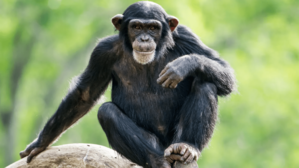
In the Republic of the Congo, Conkouati-Douli National Park (PNCD) is home to iconic wildlife of Central Africa, including the African forest elephant, the forest buffalo, the leopard, the sitatunga, the Central African chimpanzee, the mandrill, the hippopotamus, and the western lowland gorilla. To date, there are more than 900 elephants, nearly 5,000 chimpanzees, and more than 1,200 gorillas in the park (summary of the results of the 2024–2025 ecological inventory).
Its marine area, which includes the large Conkouati Lagoon and the open sea, provides a habitat for manatees, sea turtles (including the rare leatherback turtle) rays, sharks, dolphins, and humpback whales.
The PNCD is home to a human population of approximately 7,000 people, mainly concentrated in villages along the park’s southern boundary, within the so-called eco-development zone. This zoning and its associated regulations permit certain practices such as hunting, gathering, and sustainable agricultural activities for self-sufficiency but not for commercial purposes. However, poachers seeking bushmeat regularly infiltrate the park’s central zone. In addition, several illegal artisanal mining sites, both small and large, for gold and cassiterite, located in the park’s central zone, are occupied on a temporary or permanent basis by miners, with the largest camps accommodating up to 600 people.
Strongyloïdes and zoonotic issues
The genus Strongyloides comprises more than 50 species of nematodes, including S. stercoralis and S. fuelleborni, which cause strongyloidiasis in primates, including humans, and canids. Domestic dogs can act as reservoirs and serve as an epidemiological bridge between wildlife and human populations.
This neglected tropical disease is widely underdiagnosed but can be severe, even fatal, in immunocompromised individuals. It is rapidly increasing worldwide, highlighting a major public health and veterinary challenge.
Given the increased interactions between humans, domestic dogs, and wildlife - particularly in rural and forested areas - the risk of cross-species transmission is high. The transmission process remains poorly understood, necessitating enhanced surveillance through a One Health approach.