

TB .png
TB .png

French Southern Lands - Avian influenza vaccination of Yellow-billed Albatrosses on Amsterdam island

In response to the spread of avian influenza among seabirds and the risk of it affecting sub-Antarctic colonies, this project was launched to evaluate the ability of an avian influenza vaccine to elicit an immune response in yellow-billed albatrosses on Amsterdam Island.
The objective is to study the antibody response to vaccination against Highly Pathogenic Avian Influenza in the field within a natural population of yellow-billed albatrosses in order to determine whether persistent antibody levels from one year to the next can be detected, as well as antibody transfer and persistence in chicks.

Project overview

Location: French Southern Lands 🇫🇷

Project Leader: Dr. Thierry Boulinier (opens in a new tab)

Status: In progess

Duration: 3 years - October 2024 to October 2027

Partners:

Context

Epizootic global unprecedented


In recent years, influenza viruses have been re-emerging and threatening global health. Highly Pathogenic Avian Influenza (HPAI) is affecting seabirds in Europe on a massive scale, an unprecedented situation. Already weakened by global change, these species are particularly vulnerable because they breed in dense colonies, which facilitates the rapid spread of this infectious disease. HPAI is a well-known, highly contagious infectious disease affecting domestic poultry and wild birds, and the viruses responsible for it are known to evolve rapidly.


Spread to the most remote areas


Since 2022, HPAI has spread globally among wild birds, from the North Atlantic to the Pacific and as far as South America, reaching sub-Antarctic regions such as South Georgia and the Falkland Islands by the end of 2023. Previously spared, the French Southern and Antarctic Lands (TAAF) were in turn affected in 2024 (Clessin et al. 2025 (opens in a new tab)), notably through “sentinel” species such as scavenger birds. This spread confirms that even the most isolated ecosystems are no longer safe, with a high risk of rapid spread in these environments with high animal density.


Focus on the French Southern Lands: A laboratory unique in the world


Located in the Southern Ocean, between Madagascar and Antarctica, the French Southern Lands are home to millions of seabirds and mammals in an environment as spectacular as it is fragile. On Possession Island (Crozet Archipelago), accessible only after a journey of several days from Réunion Island, scientists work under difficult conditions to study and protect these ecosystems.


In response to the emergence of AIHP in 2023, innovative research programs are being conducted. These strictly protected areas, with limited human presence, are now strategic study sites for anticipating and combating this global epizootic .

Project challenges


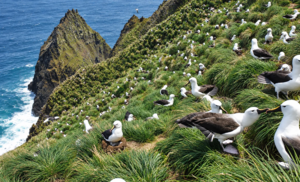
Seabirds are already vulnerable to global change, and their breeding in dense colonies leaves them highly susceptible to infectious diseases. If HPAI were to reach the French Southern and Antarctic Lands, it could affect endangered species, particularly the Amsterdam albatross, whose population is extremely small.

Scientific issue


How can we protect yellow-billed albatrosses in the face of the rapid emergence of AIHP, while studying the duration of the vaccine response in adults, the transfer of antibodies to chicks, and the protection these antibodies provide after hatching—a period when the chicks are most vulnerable?

Project objectives

What the project aims to demonstrate 
 

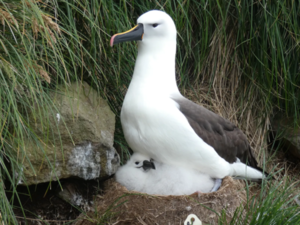
©Jérémy Tornos - CNRS-CEFE

Jeremy Tornos- IPEV-CEFE-CNRS-UM-TAAF-RN-Ceva Biovac (18).JPG
  • To determine the dynamics of the anti-H5 antibody response in adult yellow-billed albatrosses (Thalassarche carteri) following vaccination.
  • To assess the persistence of antibodies from one year to the next in these adults.
  • To measure the transfer of maternal antibodies to chicks and their persistence after hatching.
  • To provide useful knowledge for protecting other threatened wildlife species, including the Amsterdam albatross.

Proposed solution

A next-generation vaccine


The project is based on a vaccine developed by Ceva Santé Animale, originally designed for domestic and livestock species, and whose efficacy is being evaluated here in wild species.

This vaccine offers several key advantages in a zoological context:  

  • TECHNOLOGY: low species barrier and safety,
  • ADAPTATION : current circulating strains,
  • ENVIRONMENTAL IMPACT: no expression in the environment,
  • PRACTICALITY : reduced injection volume,
  • DIAGNOSTICS : differentiation between vaccinated and infected birds (DIVA).

Project implementation

Key Milestones

10/2024

Project Signing

11/2025

First Adult Vaccination

11/2026

New blood samples taken from adults, then from their chicks.

2027

Samples returned to the CEFE in March and December of each year

Results

The project results have not yet been published but will be as soon as possible.

Ceva WRF’s Involvement

Our role in this project

  • Logistical support: supply and shipment of vaccines and vaccination equipment,
  • Scientific expertise: assistance in developing protocols for vaccinating and monitoring birds.

Glossary

Differentiating Infected from Vaccinated Animals: a strategy used in animal health that makes it possible to distinguish infected animals from those that are simply vaccinated, using specific vaccines and diagnostic tests. (Source: WOAH/OIE) 
Refers to a vaccine (often inactivated or non-replicating) whose components are unable to multiply, spread, or be excreted by the vaccinated animal into the environment. (Source: European Medicines Agency)

A sentinel species is a species that enables the early detection of a health or environmental risk. (Source: WHO)


Epidemiology that investigates the determinants of disease at the “micro” (molecular) and individual levels, as well as at the “macro” (socio-environmental) level. It identifies causal processes at each of these levels and examines how a process at one level (molecular or social) might manifest itself at another level (disease in an individual). (Source: INSERM, P. Bizouarn)


An epizootic is a disease that spreads rapidly within an animal population, similar to an epidemic in humans. (Source: WHO)