
Tortue d'eau sur un bout de bois

France - Prevalence of Emydomyces testavorans infections in aquatic turtles

Aquatic turtles are susceptible to various infectious diseases, among which emerging fungal infections pose a growing public health concern.

This project by Dr. Antoine Leclerc (ZooParc de Beauval) aims to investigate, Emydomyces testavorans, a pathogenic fungus in aquatic turtles responsible for severe shell lesions, the presence of which in France has never been assessed due to a lack of available tests. The study will involve approximately 100 turtles (from zoos, European pond turtle conservation breeding programs, and rehabilitation centers) using PCR, cultures, sequencing, and histology.
The goal is to determine whether this fungus is present in France, in order to adapt clinical care, biosecurity measures, and reintroduction programs.

Project Overview

Location: France 🇫🇷

Project Leader: Dr. Antoine Leclerc (ZooParc de Beauval) (opens in a new tab)

Status: Start Date

Duration: 1.5 years – September 2026 to December 2027

Partner:

Context

Aquatic turtles are susceptible to various infectious diseases, particularly emerging fungal infections that pose a growing public health concern. Emydomyces testavorans, a fungus belonging to the order Onygenales, is now recognized as a major pathogen of aquatic turtles, primarily responsible for shell lesions that can be severe, chronic, and potentially fatal.

In the United States, numerous cases of infections with E. testavorans have been described and documented, both in the wild and in captivity. Testing for this pathogen has become a major component of surveillance within conservation and reintroduction programs.

Project challenges

Data on Emydomyces testavorans are very limited in Europe and nonexistent in France, due to the lack of available diagnostic tests in laboratories.

PCR (detection of fungal DNA) is currently the gold standard for identifying E. testavorans, but it is not offered by laboratories in France. Culture, which involves growing the fungus on a laboratory medium, is much less reliable: the fungus grows very slowly and is quickly overgrown by other, faster-growing bacteria or fungi. It requires a special medium, enriched with carapace keratin, which the project team is currently developing. As a result, the culture method misses many cases: in some instances, it reveals only another fungus, whereas PCR successfully detects Emydomyces.

Just as with Ophidiomyces ophiodiicola (another Onygenale of major importance in snakes), which was initially believed to be limited to North America, it is likely that Emydomyces is also present in Europe but remains undetected simply because it is not being tested for. There are several reasons for this:

  • The species was not described until 2019. Previously, Onygenales in reptiles were grouped under a single name (“CANV”), and their DNA, which was too distantly related to known species, made identification impossible.
  • Under a microscope, the fungus resembles common environmental fungi, and its presence was likely overlooked.
  • Clinical signs do not raise suspicion of this condition: ulcers, depressions, spots, scaling, and softening of the shell also occur in uninfected turtles (SCUD-type bacterial infection, trauma, nutritional or renal bone disease, other fungi, mycobacteria). The most characteristic lesion (epithelial inclusion cysts in the carapace bone) is visible only under a microscope, and there are asymptomatic healthy carriers.

In the case of Ophidiomyces, the widespread availability of testing and research projects initiated in Europe have made it possible (several years after the United States) to characterize its significance and its consequences for captive and wild snake populations.

Scientific issue


To assess the presence and determine the prevalence ofEmydomyces testavorans in aquatic turtles 
(both wild and captive) in metropolitan France.


Project Objectives

What the project aims to demonstrate

  • Improving knowledge of the prevalence of E. testavorans in France, in zoos, and in the wild.
  • Optimizing clinical care for affected turtles.
  • Strengthening biosecurity measures in zoos.
  • Adapting health protocols within reintroduction programs.

Proposed Solution

Ce projet vise à mener une étude multicentrique afin d’évaluer la présence de E. testavorans chez des tortues d’eau, qu’elles présentent ou non des lésions de la carapace, en combinant approches cliniques, microbiologiques et moléculaires. 
Trois types d’établissements participeront :

  • Des zoos français, hébergeant des tortues d’eau de différentes espèces, souvent exotiques.
  • Un élevage conservatoire, celui de cistudes d’Europe (Emys orbicularis), destinées à être réintroduites.
  • Des centres de soins pour la faune sauvage locale.

Les analyses porteront sur 50 tortues issues de parcs zoologiques et 50 tortues sauvages ou issues du programme de conservation des cistudes.

Espèces concernées

Parmi les espèces sauvages attendues en France figurent deux espèces protégées : la cistude d’Europe (« quasi menacée », avec un Plan national d’actions 2020-2029) et l’émyde lépreuse (Mauremys leprosa, « vulnérable », moins de 1 000 individus connus, dont plus de 90 % dans les Pyrénées-Orientales). La tortue de Floride (Trachemys scripta), espèce exotique envahissante réglementée par l’Union européenne, pourra aussi être recueillie dans les centres de soins.

Sélection des zoos

Les zoos participent sur la base du volontariat. Ils sont retenus selon la pertinence de leur collection et leur intérêt à participer à la recherche.

Project Implementation

Key Milestones

09/2026

Project Signing

10/2026

Identification of participating zoos and sample collection

12/2026

PCR analyses, cultures, and histology

06/2027

Completion of analyses, histology, and antifungal susceptibility testing.

12/2027

Data analysis and final draft

Results

The project results have not yet been published but will be as soon as possible.

Ceva WRF’s Involvement

Our role in this project

  • Financial support,
  • Operational oversight.

Glossary

PCR (Polymerase Chain Reaction) is a laboratory test that detects the DNA of a microorganism in a sample.
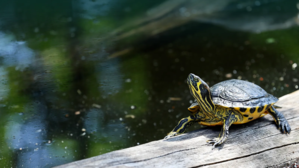
The European pond turtle (Emys orbicularis) is a protected freshwater turtle found in the wetlands of France and Europe.