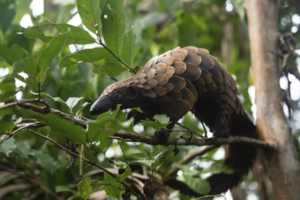
Pangolin in a tree
Pangolin in a tree

Cameroon – Establishing baseline data to better rehabilitate and protect white-bellied and black-bellied pangolins.

This project in Cameroon aims to improve the care of white-bellied and black-bellied pangolins - the world’s most endangered mammals - by addressing the lack of veterinary data. It involves analyzing blood samples from individuals considered healthy to establish reference values that will aid in monitoring and rehabilitating these animals. The goal is to establish reference blood parameters for white-bellied and black-bellied pangolins in order to better care for them and facilitate their return to the wild.

Project overview

Location: Cameroon 🇨🇲

Project Leader: Dr. Marine Montblanc  

Status: In progress  

Duration: 2 years - February 2025 to February 2027 

Partner: 

Context

The pangolin is now considered the world’s most endangered mammal due to habitat destruction, illegal trafficking, and the consumption of bushmeat.

Protected by their scales. But they still need protection.

Tikki Hywood Foundation

Upon arrival at the Tikki Hywood Center, the animals are often in poor health, due in particular to stress, injuries, and unsuitable captive conditions and diet.

Blood tests are an essential diagnostic tool in veterinary medicine for assessing their health, detecting potential diseases, and supporting their rehabilitation. However, interpreting these test results requires reliable reference values, which are currently largely unavailable for these species. 

Project challenges


The available hematological data are extremely limited: only two studies have been conducted on white-bellied pangolins in captivity, and no data exist for the black-bellied pangolin. 

Furthermore, the lack of reference values from wild populations makes it difficult to interpret biological results. Since monitoring in the wild is not possible, it is necessary to identify a reliable alternative, such as studying healthy individuals housed in a center.

Scientific issue


How to establish hematological and biochemical reliable reference values for white-bellied and black-bellied pangolins, despite the lack of data from wild populations? 

Proposed solution


This project is the first in-situ study conducted in Africa on these two pangolin species, with direct applications for their veterinary care. 

The project involves establishing hematological and biochemical reference values based on samples collected from pangolins considered healthy (showing no clinical signs) that were seized in the bushmeat trade. 

Blood samples are collected three days after their arrival at the center and then analyzed to measure various biological parameters. 

Project objectives

What the Project aims to demonstrate 


  • To establish hematological and biochemical reference values for white-bellied and black-bellied pangolins 
  • To improve the accuracy of veterinary diagnoses 
  • Optimize the care and rehabilitation of individual animals 
  • Contribute to the conservation of the species by facilitating their return to the wild 
Fichier 5.png

Project implementation

Key milestones

01/2025

Signing of the partnership

2026

18 samples collected out of 40

2027

Sample analysis and initial results

Results

The project results have not yet been published but will be as soon as possible. 

Ceva WRF's Involvement

Our role in this Project  
 

  • Financial support,
  • Operational oversight,
  • Donation of equipment: centrifuge for blood samples.

Glossary

Values of certain blood components such as hemoglobin, red and white blood cells, and platelets. They provide information on overall health and help detect abnormalities. 
Values of certain parameters that help assess the functioning of vital organs and can indicate metabolic disorders.