

Relating to the urinary and genital systems, which are often considered together due to their anatomical proximity and certain shared functions. (Source: WHO)

Australia – Developing a vaccine to protect koalas from chlamydiosis
This project in Australia aims to develop a vaccine against koala chlamydiosis, a major cause of the decline of this iconic species. The vaccine, the first large-scale preventive solution, has demonstrated a significant reduction in mortality and symptom severity, thereby improving population survival and reproduction. The goal now is to optimize its deployment in real-world conditions to sustainably strengthen koala conservation.
Some koala populations are edging a little closer to local extinction every day.
Professor Peter Timms - University of the Sunshine Coast
Transmission occurs primarily through direct contact, particularly during breeding and birthing.
The clinical manifestations of the disease are varied and often severe:
- Severe conjunctivitis that can lead to blindness,
Urogenitalinfections causing infertility,- Deterioration in general health that can lead to increased mortality.
It is important to note that infection and disease are not always linked. Some koalas may carry the bacterium without showing any visible clinical signs, while compatible clinical signs may appear without the detection of Chlamydia pecorum.
Different effects depending on sex

The disease affects males and females differently:
Males more frequently exhibit eye lesions, which are often reversible,
Females are more likely to experience reproductive disorders, which are generally persistent and irreversible.
Furthermore, although the infection rate is similar in males and females, females more frequently exhibit visible clinical signs of the disease.
A key factor in the species’ decline
Koala chlamydiosis is now one of the main factors contributing to the species’ decline, alongside:
- Habitat loss and habitat fragmentation,
- Forest fires,
- Road collisions.
Project challenges
The fight against koala chlamydiosis involves both scientific and operational challenges. A better understanding of the marsupials’ immune response is essential for developing solutions tailored to this species with its unique biological characteristics. This research is complicated by significant variability among individuals and populations.
At the same time, deploying prevention tools in the wild presents a major logistical challenge, particularly when implementing large-scale vaccination strategies.
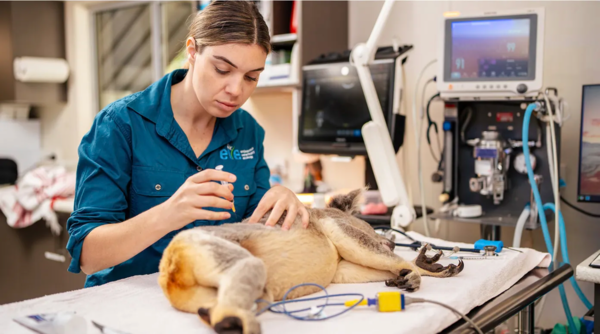
Why vaccinate koalas against chlamydiosis?
- Preserving an iconic, endangered species
The koala is an iconic Australian species whose populations are experiencing a significant decline in several regions. Among the major causes, chlamydiosis plays a central role:
- It is a major cause of infertility, limiting population renewal,
- It leads to chronic health issues, which have a lasting impact on the health and survival of individual koalas.
- Going beyond the limits of current approaches
Today, existing solutions remain insufficient to curb the spread of the disease:
- Antibiotic treatments are difficult to administer in the wild and can disrupt the digestion of eucalyptus leaves, the koalas’ primary food source,
- Current management strategies, based on capturing and treating individual koalas, are cumbersome, ill-suited for large-scale implementation, and do not allow for effective prevention.
Proposed solution
A sustainable vaccine innovation
- The development of a vaccine represents a major breakthrough:
- The first solution enabling a large-scale preventive approach,
- The potential to reduce transmission and the prevalence of the disease.
- The recently approved vaccine is a world first, paving the way for new conservation strategies.
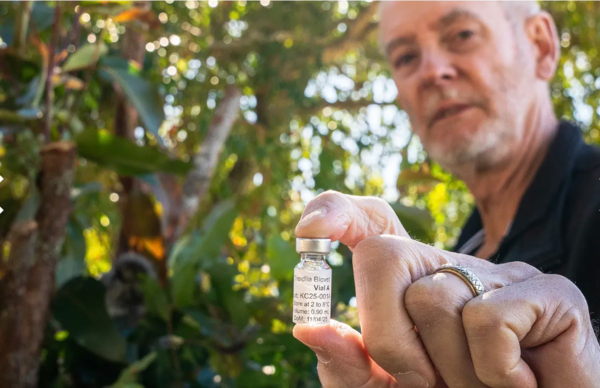
We knew that a single-dose vaccine, without a booster, was the key to slowing the rapid and devastating spread of this disease.
Professor Peter Timms - University of the Sunshine Coast
03/2023
Signing of the partnership
09/2025